
By: William Kearns, Pilot
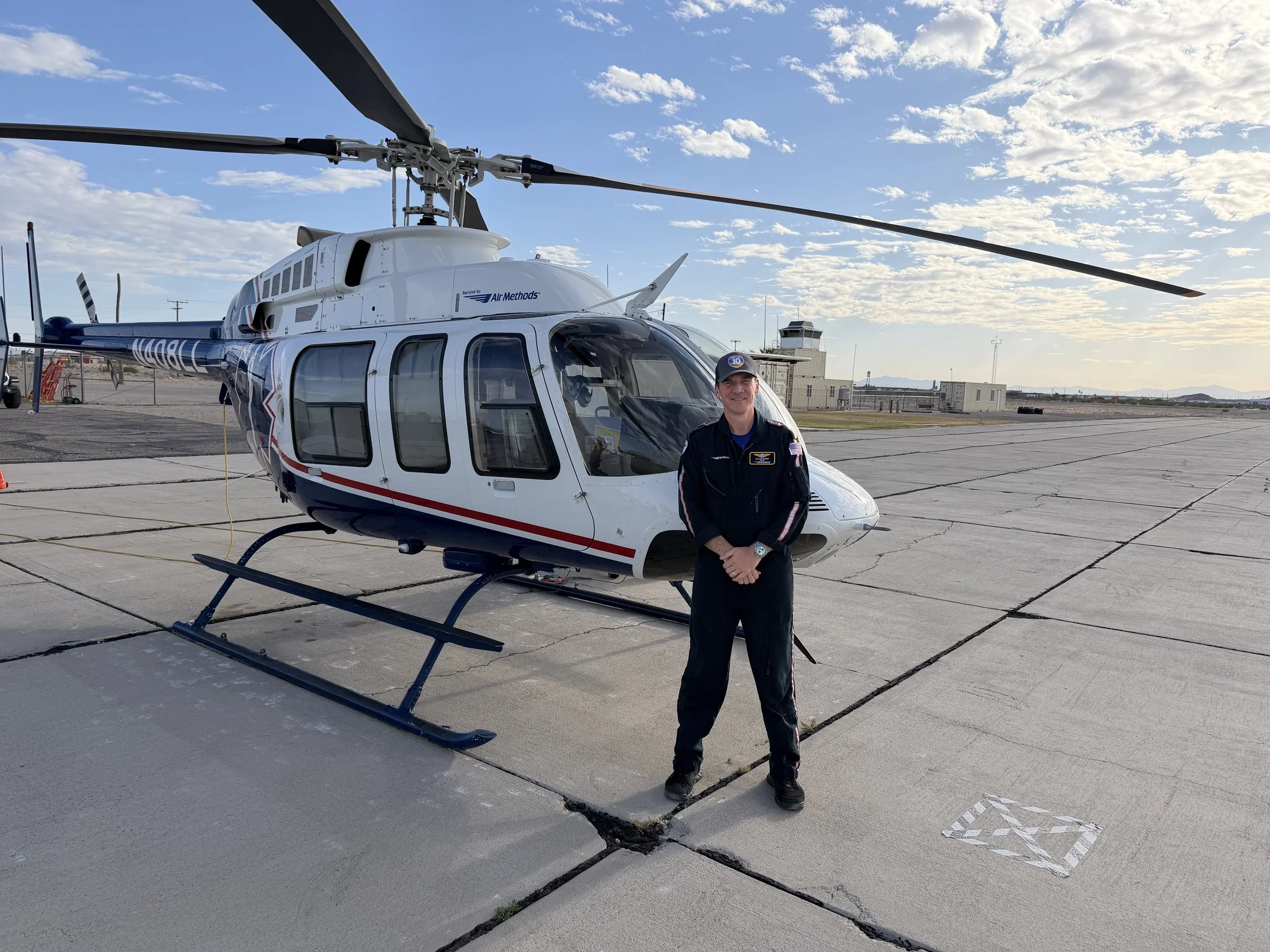
After more than 26 years in the U.S. Army, I knew I wanted to keep flying and put my experience to work helping others. When I retired in 2025, I joined Air Methods as a pilot. It’s a different role with different responsibilities, and I’ve found it rewarding to apply the aviation skills, discipline, and teamwork I developed in the Army to helping patients reach the care they need.
Over the years, I’ve seen how important timely air medical transport can be, especially when patients are far from the care they need. One flight that stands out involved a rollover crash in a remote part of Arizona. A mother, father, and child were all injured, and three air medical crews responded from different locations.
Each patient had different injuries and needed a different level of care. In that part of the country, the distance between emergency scenes and medical care can be several hours. Having three air medical crews available meant we could get each family member to the care they needed much sooner.
But I’ll be the first to tell you that the real heroes are the flight nurses and paramedics in the back of the helicopter. I’ve watched them handle incredibly difficult situations with a level of skill and calm that never ceases to impress me. My job is to get them where they need to be so they can do what they do best.
As an Army veteran, there’s also something special about helping fellow Veterans. I’ve transported several during my time as an air ambulance pilot, and those moments remind me that the people we’re transporting have their own stories, families, and lives beyond whatever emergency brought us together. And for Veterans in rural communities, having access to emergency air medical services can be especially important when specialized care is hours away.
Unfortunately, there are factors that put air ambulance access at risk. In 2020, the Department of Veterans Affairs proposed changes that would tie air ambulance reimbursement to outdated Medicare rates. Following advocacy from Veterans Service Organizations and bipartisan support in Congress, the proposed cuts were delayed until 2029.
I've seen what these services make possible, and I worry about what it would mean for patients if air medical care weren't available when they needed it. In the remote communities where I fly, the difference between reaching specialized care by air or by road can be measured in hours.
That's why I believe Congress needs to act. The bipartisan Protecting Air Ambulance Services for Americans Act (S. 2518/H.R. 4792) would allow Medicare reimbursement rates for air ambulance services to be updated using more current cost data, helping support continued access to this critical care.
Every time I lift off, I know there's someone counting on us, often on one of the worst days of their life. I’m proud to work alongside the flight nurses and paramedics who care for those patients and to play a part in getting them safely to the treatment they need.