
By: Sara Curtis, Flight Nurse
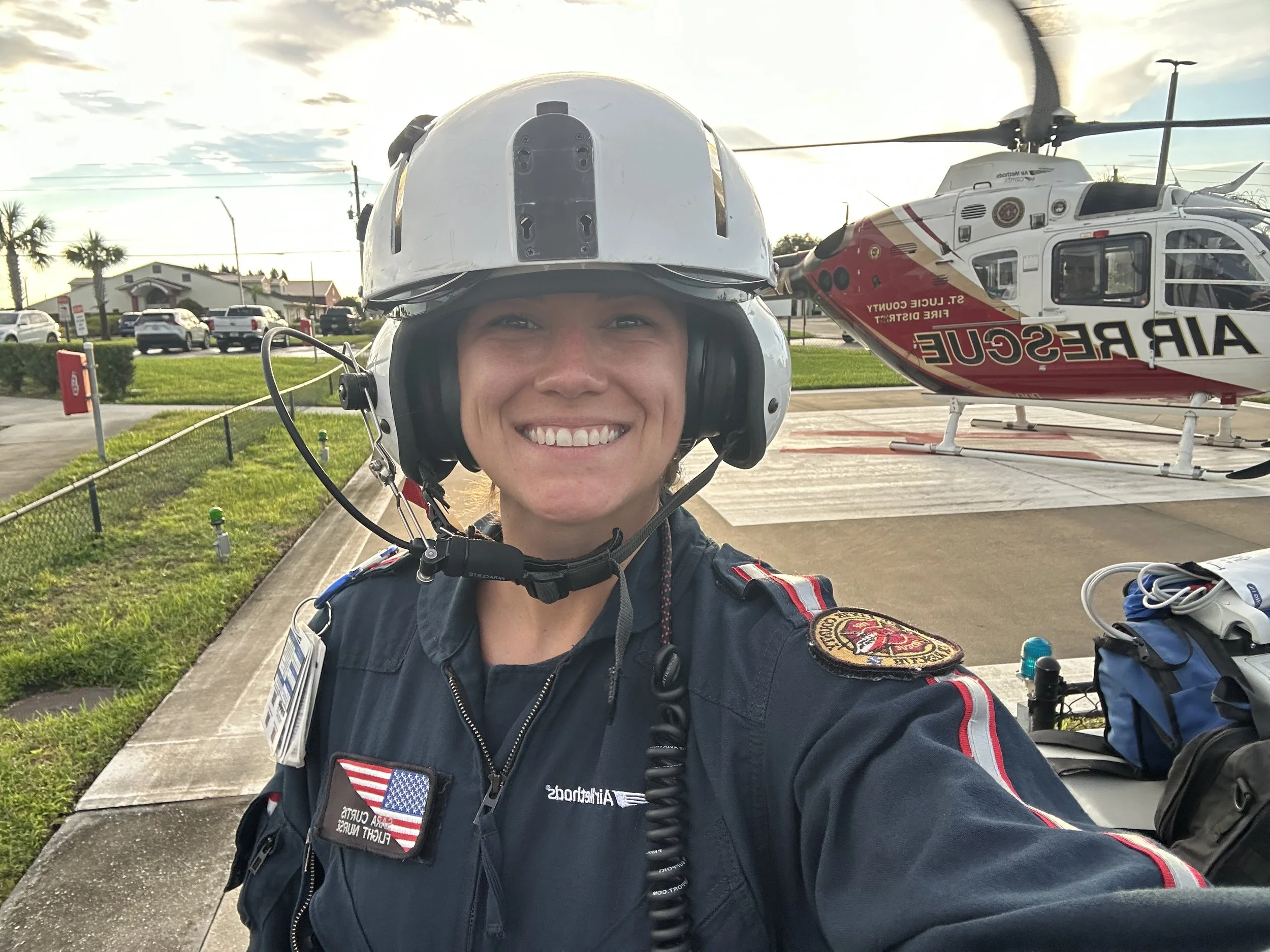
I have wanted to be a flight nurse since I was about five or six years old. My grandfather was a burn surgeon in Augusta, Georgia, where he helped establish a burn unit and an air ambulance program. One day, while we were visiting him at the hospital, a code orange called for a burn patient. We went outside to watch the helicopter land, and I turned to my mom and said, “I’m going to be a flight nurse one day.” And here we are.
Today, I’m a flight nurse in Central Florida. Over the past five years, I’ve cared for patients on more than 600 flights. When I step back and think about it, that’s more than 600 people whose lives I’ve had the opportunity to impact, and that’s an honor and responsibility I take seriously.
One flight that will always stay with me happened during Christmas week a few years ago. We responded to a motorcycle crash involving a teenager on a local interstate. When we arrived, he was coherent and seemed relatively okay at first, aside from being scared.
But he needed blood—a lot of it.
Because we carry blood on board our aircraft unlike most ground ambulances, we were able to give him three units of blood and airlift him to the hospital in about eight minutes, turning what would have been roughly a 45-minute drive into a lifesaving shortcut. Because he went by air, he reached the trauma bay and operating room in time, and ultimately spent Christmas with his family.
That’s a flight I’ll never forget.
Moments like that are why I love this work. We like to call ourselves a “flying ICU” because we’re bringing intensive care directly to patients, whether that’s at the scene of an accident or at a hospital that lacks specialized care. In emergency medicine, we say that “time is brain and time is muscle.” For someone experiencing serious trauma, a stroke, or a heart attack, getting to the right care quickly makes all the difference.
I’ve seen firsthand how important air ambulance services are for rural communities. In parts of Central Florida where I work, some counties have just a handful of ground emergency vehicles to respond to 911 calls. One area has only three, while another has just one. When the nearest trauma center or specialized hospital is more than an hour away by road, transporting a patient can take those ground crews away from their communities for a significant amount of time, leaving the community with no care.
When we respond by air, we can get patients to critical care while keeping local emergency crews available for the next call.
I wish more people understood that we’re doing so much more than providing a ride to the hospital. We’re caring for people on what is often one of the worst days of their lives. Sometimes that means administering blood or other lifesaving treatments mid-air. Other times, it’s taking a few extra moments to talk with an anxious family member, answering their questions and helping them understand what is happening before their loved one is flown to another hospital.
Every patient matters, and we want to know that we’ve done everything we can do to give them the best chance possible.
I worry about what it would mean for patients and communities if our services weren’t available. In rural areas especially, losing access to air medical care could mean longer waits to reach specialized treatment and fewer emergency resources available locally.
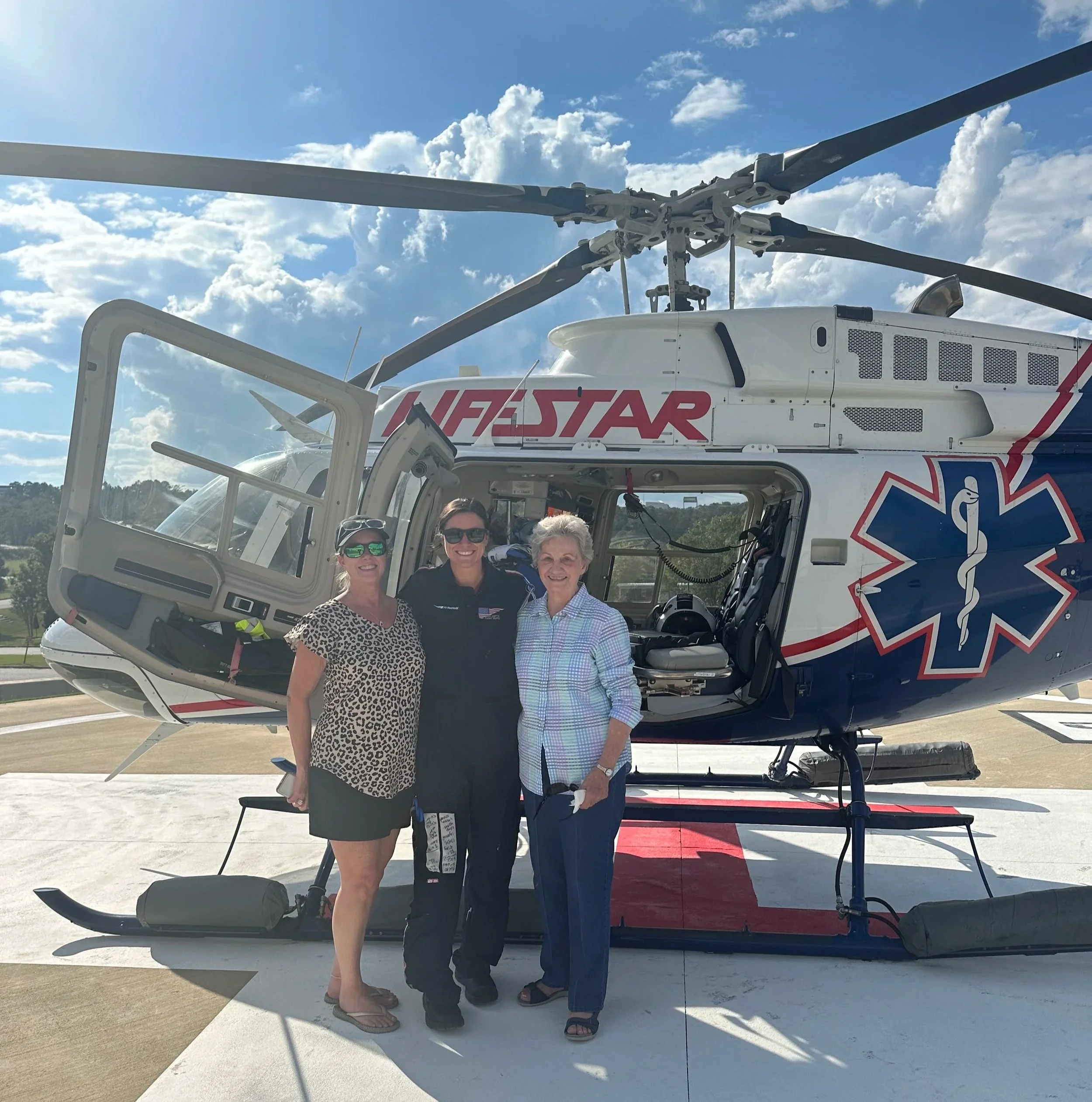
After Hurricane Helene, I volunteered to cover a shift in Georgia. Our first flight was a burn patient headed to the very center my grandfather helped establish years ago. I called my mom and asked her to meet me there. In a full circle moment, my mom and grandmother watched us land and bring the patient inside the very same hospital where my childhood dream first came alive.
That’s why protecting these services matters so urgently. Today, unfortunately, Medicare reimburses approximately 59% of the average cost of an air ambulance transport, using a reimbursement system has not been meaningfully updated in more than 25 years.
The bipartisan Protecting Air Ambulance Services for Americans Act (S. 2518/H.R. 4792) would allow the reimbursement rates for air ambulance services to be updated using current cost data, helping support continued access to this lifesaving care.
Five years into this career, I still think I have the best job in the world. But what matters most isn’t the number of flights I’ve been on; it’s knowing that I was there for someone when they needed help, and that I gave them the best chance I could. I want every patient, no matter where they live, to have that same chance.
That is why I'm asking Congress to support the Protecting Air Ambulance Services for Americans Act—so that when the next patient needs us, we're there to answer the call. You can help make sure we are. Take action today and urge Congress to support the Protecting Air Ambulance Services for Americans Act.